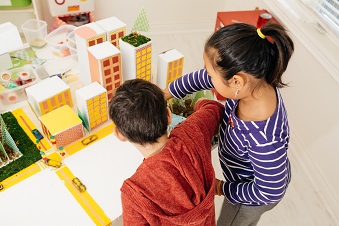
Focus on autonomy and give children choices, particularly with projects based on their personal interests.
As children grow, they develop a greater need for autonomy, engage in more complex problem-solving and seek out more social interactions. Giving children opportunities to extend on their learning empowers them to take ownership, which prevents boredom.
For older children, involving them in long-term projects that require planning, collaboration, and critical thinking can stimulate curiosity while also encouraging perseverance and teamwork.
You could introduce action research projects, working together with children to explore topics of interest. It might start from what a child did on the weekend or a place they visited. For example, talking about a visit
to the farm or zoo could prompt discussion about a particular animal, then learning about what they eat, their habitat and what country they come from originally. This could be extended by talking about different habitats
or different countries, naturally allowing the learning and program to evolve based on the child’s curiosity. Allow space for this to happen within the program, and provide resources like construction materials and magazines so
children can research and plan. Give them time to explore, investigate and collaborate.
When projects are guided by children’s voices and ideas, you can foster an environment where they stay engaged, motivated and enjoy learning throughout the year.
Aisha Grewal
Professional Support Consultant, It Takes A Village
We can support your educator team to understand the fundamentals of multi-age programming and learn simple strategies for planning programs that meet diverse individual learning and developmental needs. Learn more about our professional learning packages for multi-age programming here.